Welcome. QuSciTech Press hosts the official publication, resources, and companion materials for Quantum AI Systems: Theory, Architectures, and Applications—a system-level treatment of quantum computing and artificial intelligence.
Featured Title
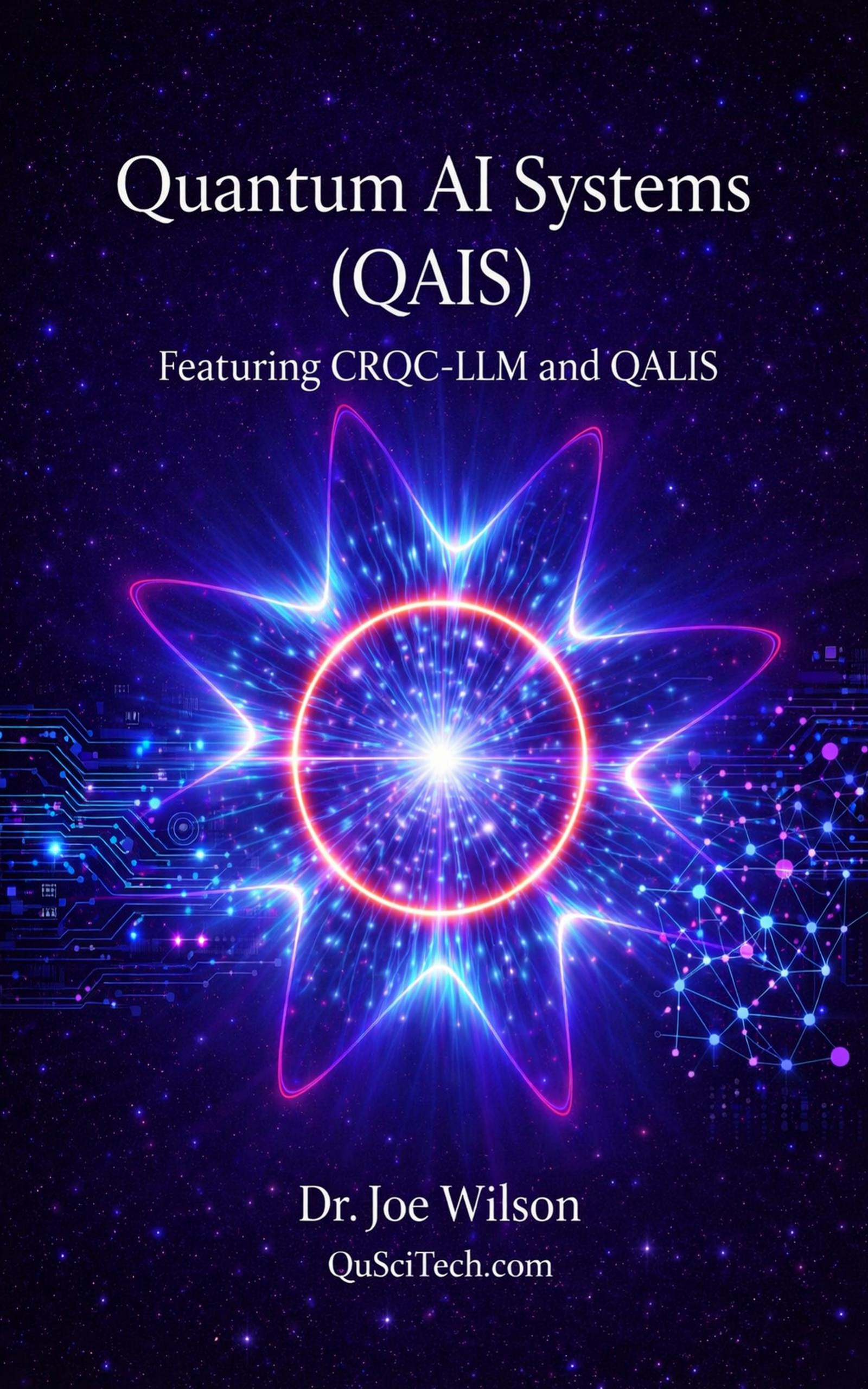
System-level quantum–AI architecture, verification, and governance.
Quantum AI Systems: Theory, Architectures, and Applications develops a system-level framework for integrating quantum computing and artificial intelligence into verifiable, deployable architectures. The book defines Quantum AI Systems (QAIS, pronounced QWAS) as a system-of-systems discipline in which representation, interference, constraint, and measurement govern long-horizon behavior.
Using the dual evaluative frameworks of QALIS and CRQC–LLM, the book analyzes how architectural choices influence resilience, verification, and adversarial robustness across hybrid quantum–AI pipelines. Emphasis is placed on operational correctness, governance, and long-term system stability.
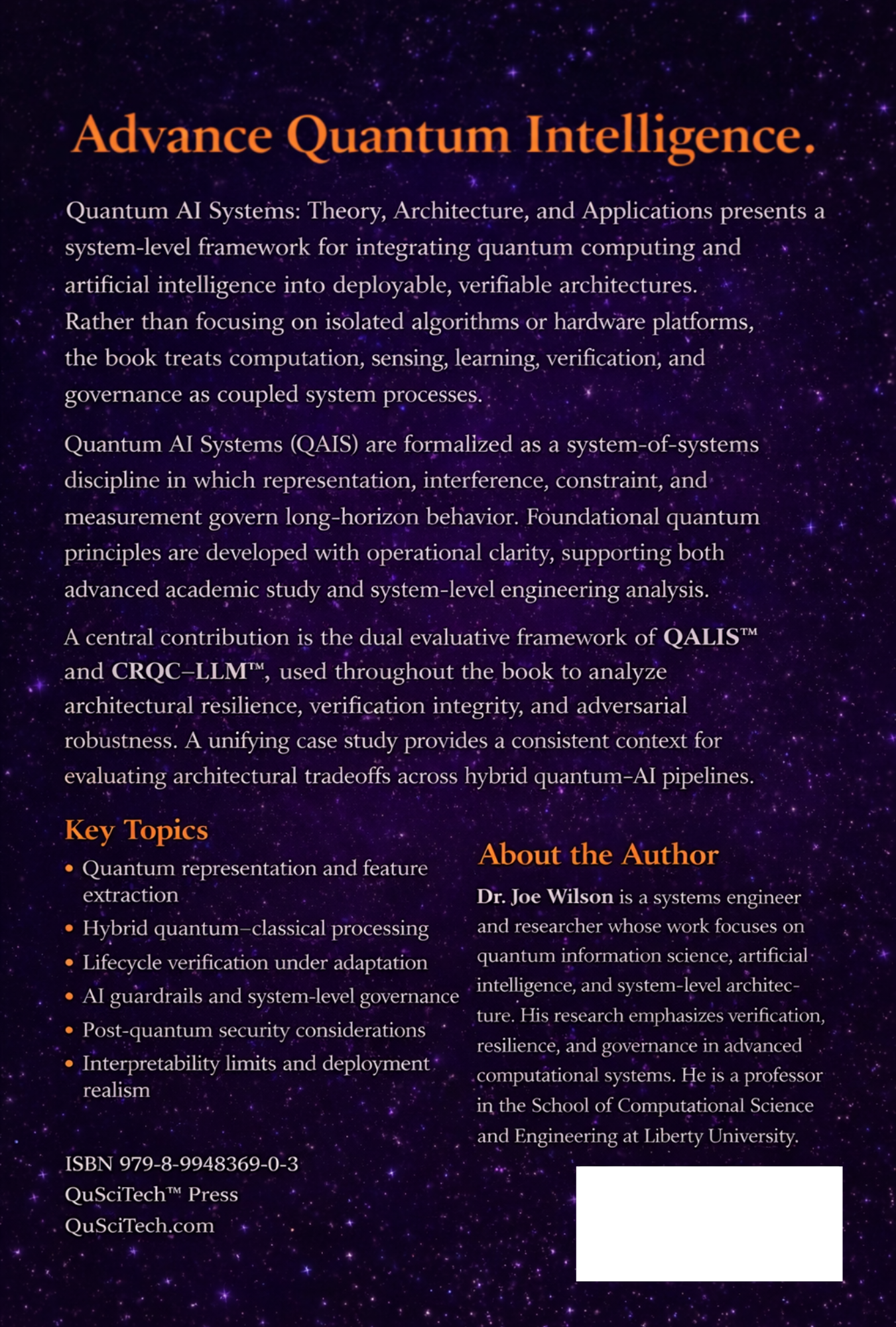
About this site
QuSciTech Press™ serves as the digital hub for Quantum AI Systems: Theory, Architectures, and Applications. It hosts structured resources, official DOI references, companion labs, and verified reviewer links under the unified QuSciTech Labs/Press deployment model.
Every page follows the Universal Labs/Press Standard—ensuring consistent navigation, accessibility, and visual identity across all QuSciTech web properties.
Explore
QAIS Image Gallery
Explore 189 compendium-aligned figures illustrating quantum foundations, QAIS architectures, learning systems, communication, governance, and deployment.
- QAIS Core Concepts — Explore the architecture, system layers, learning models, and governance principles of Quantum AI Systems.
- About — Learn the mission and editorial vision of QuSciTech Press.
- What’s Inside — Review the full chapter structure and QAIS Quantum Stack overview.
- Labs — Access reproducible lab exercises for quantum AI experiments.
- Instructors — Teaching assets and verified academic resources.
- Press — Media and publication announcements.
- DOI Registry — Official digital identifiers for citation and version control.
- Purchase Quantum Book — Verified KDP retail and institutional access links.
Author
Written by Dr. Joe Wilson, Quantum AI Systems unifies quantum information science with intelligent systems architecture. Each chapter builds toward the QAIS framework—a model that treats quantum coherence, learning, and reasoning as design primitives for next-generation AI infrastructures.
Get started
To begin exploring, select any topic from the navigation bar or the sections above. For citation and DOI access, use the DOI page linked below.